
Independent Waste’s roll-off dumpsters are designed to handle the biggest construction, development, and demolition projects in the industry. However, there are certain types of specialized waste that cannot be handled with a roll-off container. Please review this list before placing your order with us, and feel free to contact our team with further questions.
Prohibited Items
San Antonio | Dallas–Fort Worth | Birmingham | Nashville
What Can Go in a Dumpster? Your Disposal Guide
Review our guide to learn what cannot be placed in our roll-off dumpsters.
Explore More Dumpster Rental Resources
Construction Waste Disposal Guide
We’re Ready When You Are. Order a Dumpster Today.
Whether you’re building, renovating, or cleaning up, Independent Waste has 20-, 30-, or 40-yard dumpsters ready to deploy to your location. Order today for next-day or scheduled delivery.
List of Unacceptable Materials
Aerosol Cans & Liquids
Don't toss aerosol cans in roll-off dumpsters: their residue, flammability, and fragility pose explosion, fire, and contamination risks. Puncture and empty them safely and recycle them through designated local programs.
Animal carcasses
Decomposing bodies attract pests and release harmful bacteria, potentially contaminating the dumpster and surrounding area, while also posing risks to sanitation workers. Always consult your local regulatory agencies or contact your local landfill directly for proper carcass disposal procedures.
Appliances with Freon™
Freon-filled appliances like fridges and AC units are no-gos in roll-off dumpsters for two key reasons. First, Freon is a potent greenhouse gas, and if it leaks, it becomes an environmental hazard. Second, trapped Freon under pressure can explode if the appliance gets crushed or punctured in the dumpster, potentially injuring workers.
Asbestos
If disturbed even slightly, asbestos fibers can become airborne and cause deadly lung diseases like mesothelioma. Strict containment and handling protocols are required to avoid releasing these dangerous fibers into the environment and harming people.
Barrels with lids secured
Concealed contents may be hazardous or explosive, posing risks to waste workers and handlers. Additionally, hidden leaks or damage in sealed barrels could lead to the release of harmful substances. Improperly disposing of these containers in dumpsters may violate state and federal regulations, risking environmental and health hazards.
Chemical products
Chemical leaks can pollute landfills and surrounding soil, harming ecosystems and potentially entering groundwater. Additionally, flammable, corrosive, or reactive chemicals pose explosion, fire, and health risks to waste workers and the environment. Opt for safer disposal options like hazardous waste centers or dedicated chemical recycling programs.
Electronics
Electronics contain harmful metals and chemicals that can leach into landfills, poisoning the environment. Damaged electronics can spark fires or explosions in the dumpster, endangering workers and nearby areas.
Contaminated Soils
Contaminated soils harbor pollutants that can leak into the ground, polluting soil and water sources and harming ecosystems. Workers handling dumpsters with contaminated soil risk exposure to these toxins and hazardous substances, endangering their health and safety.
Fluorescent tubes
Fluorescent tubes contain small amounts of mercury, a potent neurotoxin that contaminates soil and water. Their fragile nature increases the chance of them shattering in the dumpster, releasing mercury vapor and glass shards. Recycle or dispose of fluorescent tubes responsibly through designated programs or certified facilities equipped to handle and process them safely.
Medical waste
Medical waste, like needles and syringes, carries potential pathogens and infectious agents that can pose serious health risks to workers handling the dumpster and anyone in the vicinity if it accidentally punctures or leaks. Improper disposal of medical waste also violates several safety regulations and patient privacy laws (HIPAA).
Always use designated medical waste disposal channels through specialized waste management companies to ensure safe and compliant disposal.
Oil filters
Used oil contains harmful chemicals like heavy metals and hydrocarbons. Even seemingly drained filters can retain traces of oil, presenting a fire risk if they come into contact with sparks or heat in the dumpster. To protect soil, groundwater, and worker safety, these items are prohibited.
Propane tanks
Propane tanks are prohibited in roll-off dumpsters due to the explosive risk. Residual gas or sparks can trigger blasts, endangering workers and the surrounding area. Always opt for safe disposal through propane retailers or designated recycling facilities.
Radioactive material
Radioactive materials require specialized handling, storage, and disposal methods to prevent contamination and ensure the safety of waste workers and the public. Standard dumpsters are not equipped to meet the stringent safety measures and regulatory requirements associated with radioactive waste.
Railroad ties
Railroad ties are treated with harmful chemicals like creosote and arsenic, making them environmental hazards. Tossing them in a roll-off dumpster risks soil and water contamination, endangering ecosystems and potentially harming people.
Tires
Tires are deemed hazardous because they’re composed of rubber, which does not decompose effectively over time, resulting in degradation problems in landfills. As tires deteriorate, they trap methane gas and become buoyant, which can disrupt landfill design and become a fire hazard.
Other special wastes
Any materials deemed explosive, toxic, biohazardous, corrosive, or otherwise hazardous to human or environmental health are not permitted in our containers.
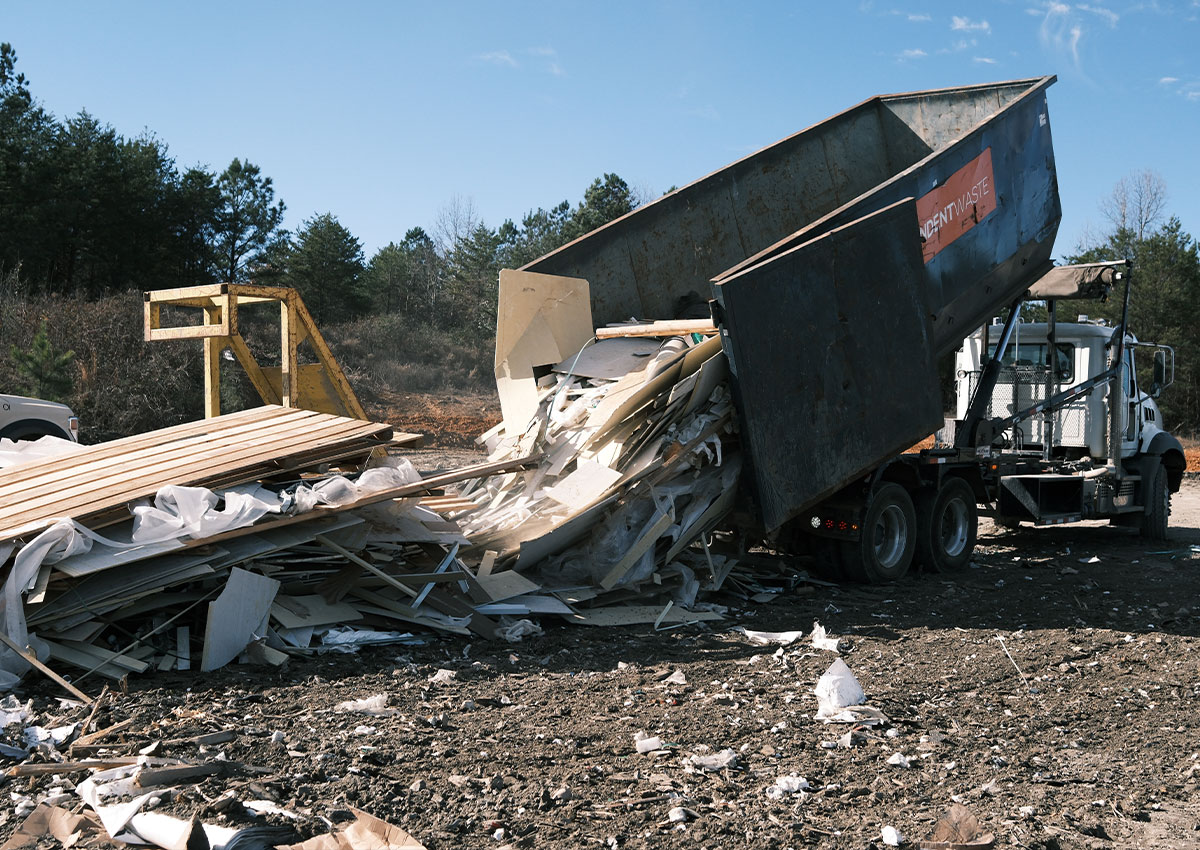
List of Generally Acceptable Materials
- Household junk: Furniture, mattresses, appliances (without freon), clothing, books, toys, pots and pans, rugs, carpets
- Construction and renovation debris: Lumber, drywall, scrap metal, roofing shingles, windows, doors, cabinets, countertops, bricks, concrete, tiles
- Yard waste: Branches, leaves, grass clippings, brush, sod (sometimes requires specific disposal facilities)
- Other common items: Cardboard, paper, magazines, newspapers, packaging waste, pallets
What Makes Us the Most Trusted Construction Waste Haulers
Honest
Independent Waste values the importance of partnership through honest and clear communication.
Responsive
We understand the importance of being present, responsive, and ready to help.
Flexible
Our teams pride themselves on finding progressive solutions and being flexible to meet our partners where they are. We win when we help you win.
Committed
We are committed to hard work and going the extra mile to deliver the highest level of service.
Dependable
At Independent Waste, we know that our business is only as good as our service. We’re here when you need us—every time.
Questions About Your Waste Materials? Ask Our Experts
We understand that some situations require speaking to an expert. If you’re unsure about a waste type on your job site, reach out to our team today for personalized recommendations. We’ll let you know if a roll-off dumpster is right for you and find the ideal size.